DAY 3 - Spotting lions in the wild in Gir National Park; Sitting on terrace of St Thomas Cathedral and soaking in Diu
Route: Sasan Gir - Diu - Mangrol
Distance: 251 km
Trip: 1241 km
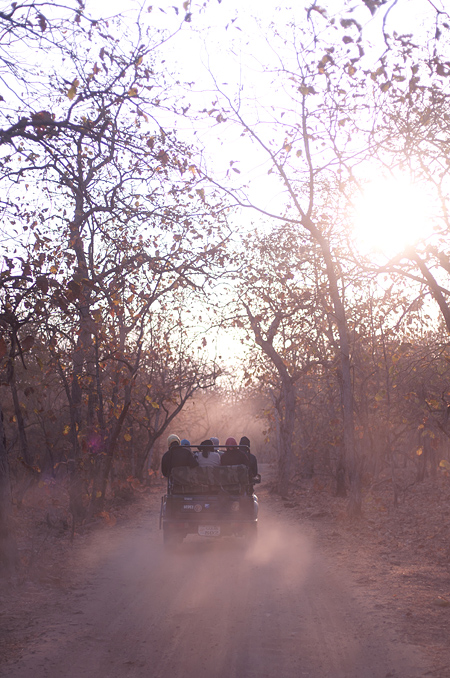
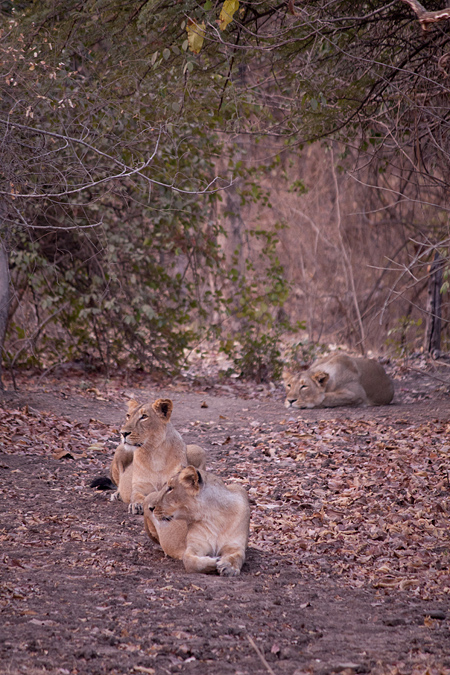
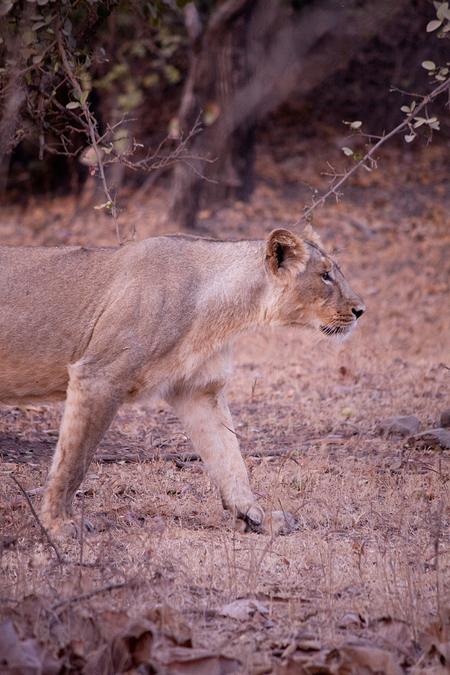
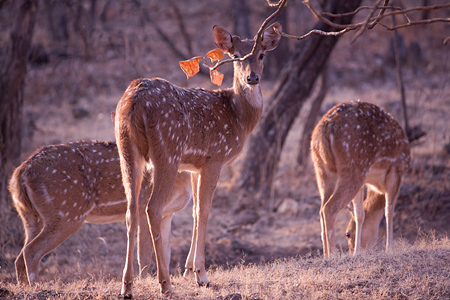
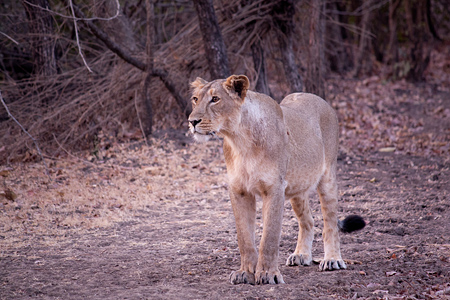
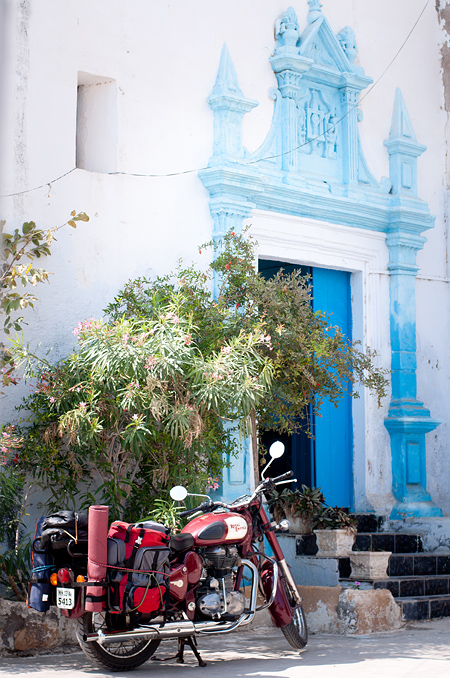
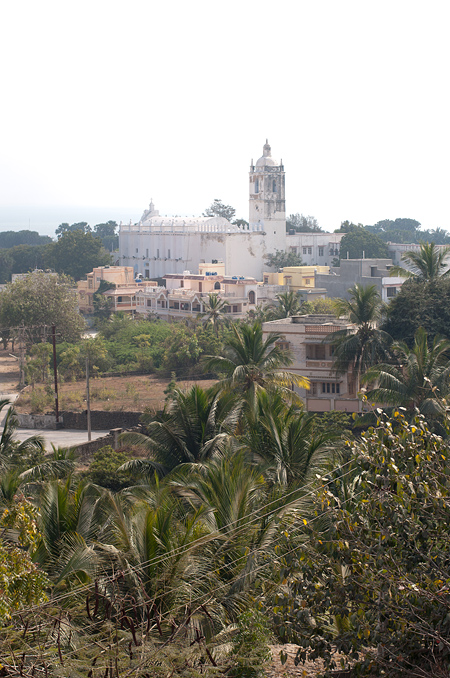
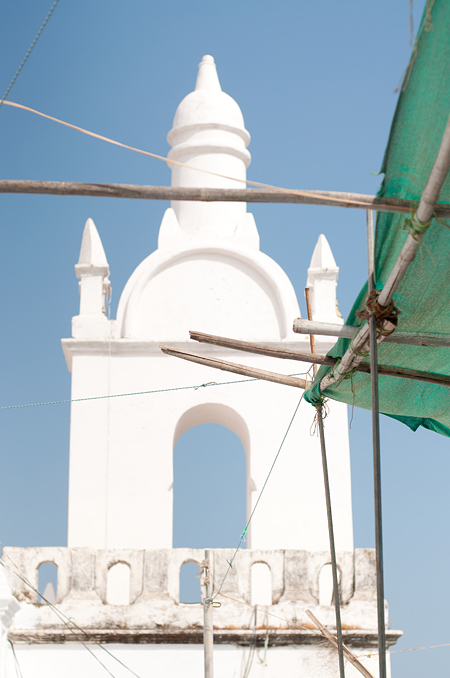
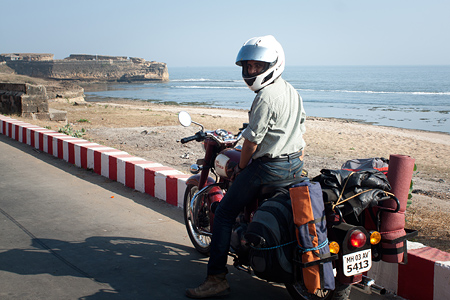
Night: Shakti Lodge, Mangrol The alarm went off at 4 am. "Only one five permits will be given. One five. You should queue up at the forest office gate by four thirty," our hotel manager had told us the previous night about safari permits. Gir National Park is the last reserve and home of the pure Asiatic Lions (Panthera leo persica; Conservation status: EN). Three safaris are conducted every day in Gir - one at dawn, one in the morning, and a third one in late afternoon. Permits are given to 30 vehicles in each safari (15 in advance and 15 in current). A permit costs Rs. 400 per vehicle. The fee for a compulsory guide is Rs. 150 and camera is Rs. 100. Renting a Gypsy costs Rs. 1000 (can seat 6). So that's Rs. 1650 for a safari for 1-6 people. There are 7 routes/zones and are decided randomly. When we reached the gates at 4.30 am, we were expecting a few souls to be around. There were none. We sat there sipping tea wondering if we really needed to come here this early. But at 5 am people suddenly emerged from different corners and we were already #4 in the queue to the window (how, I don't know!). People arriving at 5.30 am were already outside the 15 permit buffer. The office window opened at 6 am sharp and issued us a permit and assigned a naturalist/guide, Yaseen, for the game drive. Many locals have Gypsys that you can hire for the game drive. Our hotel owner had one and we rented the same. We drove into the park on route #7 at around 6.45 am. Yaseen claimed to be guiding visitors for 14 years but was boring as hell. "Welcome to Gir. There are x lions, y spotted deers, z nilgais, ..." he rattled off like a tape. I asked him whose territory was Route 7. "There are 2 males in Route 1, 1 male in Route 2, a pride in Route 4 ..." "And Route 7?" "1 Female," Yaseen mumbled. Well, my heart sank a bit. Given my previous experience of 4 game drives and 0 sightings of the big cat in Ranthambore, I was a bit apprehensive of what lay ahead for us here in Gir. Not being able to watch a lion in the wild would be a bit of a disappointment. And Yaseen's stupid chatter and stories about how he would do his "setting with the rangers" and "take risky" (sic) to show visitors the lions further irritated me. A good naturalist will show you the jungle and wildlife will happen to you. That's part of the thrill. We focussed on the road. The forest looked beautiful in the morning light. Shafts of light beamed from between the tree trunks and branches. Spotted deer as easy to, well, spot. Forest rangers had conducted a safety fire to burn out excessively dry vegetation on the edges of tracks. We crossed other Gypsys tumbling around the forest looking for pug marks or calls. No one had a sighting yet. We were not driving through a stretch that was shared by Track 4 and Track 7. 45 minutes into the drive, our driver hit the brakes. There they were - three gorgeous lionesses slouching in the woods. Another Gypsy that followed us also stopped. We saw the lions with hushed breaths. After lazing around for about 20 mins, the lions were bored of us staring at them. One after the other, they got up and walked deeper into the woods. Once the lions disappeared, the rest of the safari time was spent driving on the designated track route and covering the sanctuary. Riding out of Gir, I thought man cannot be another animal. Animals hunt or gather, eat, mate and bear offspring. Man learns algebra, calculus; invents mutual funds, life insurance, CDOs; builds roads, railways, windmills; goes through dates, breakups, marriages, divorces; wages wars, drone attacks, terrorist strikes; changes the planet like no other living being does. How is it even fair to say man is another animal? After a breakfast of aloo parathas and methi theplas, we were ready to hit the road north-west to Dwarka. But the allure of Diu about 110 km south-east of Gir was too enticing to give up. So we said we will get to Dwarka when we get to Dwarka and started riding south-east. After a couple of hours of riding through beautiful country roads, we were in Diu. Diu itself had lovely roads (got to love union territories!) and town seemed in no hurry to move. The town was a mix of brightly colored new homes with fancy lines and a pastel colored old ones with white columns and window sills. Towers of white-washed cathedrals rose above the palm skyline. There was the huge St Pauls, the main church of Diu; the St Thomas, now Diu Museum; and St Francis of Assisi, now a hospital. We went around the twisting circular lanes till we found, with much difficulty, the place we were looking for - Hotel Sao Tome Retiro - which was actually housed on the side terrace of St Thomas. A steep flight of blood red stairs took us to the terrace where a greenhouse sheet tied on some bamboo poles created a makeshift shack. The terrace offered fantastic views of Diu town, the fort, other cathedrals and the sea beyond. And nothing better than a cold beverage on a bright sunny afternoon to top it up. For lunch, we headed to O'Coqueiro, a quaint restaurant in the front-yard of an old bungalow where we met a most interesting entrepreneur - Kailash Pandey, the owner of the restaurant. We got chatting with him. Kailash was a handsome man with a warm smile, his almond eyes giving away his Kumaon origin. He moved to Diu fifteen years ago and has been in the restaurant business since. Every year he escapes to his native hills when the heat becomes unbearable in the Diu summer. "Why did you name your restaurant O'Coqueiro?" I asked him. "I came here and looked around and I saw coconut trees everywhere," Kailash said. "I asked my landlord, 'How do you say coconut in Portuguese?' and he replied coqueiro. I had the name for my restaurant - O'Coqueiro." It was hard to say goodbye to Diu. But if we stayed the night here, we would have to drop Dwarka from our trip before we proceeded to Kutch. So around 4 pm, we left Diu and started riding towards Dwarka. Roads for most part were under construction and made riding inconvenient. At 7.30 pm, we decided to stop riding and stay the night in the town of Mangrol. One of the two lodges in the town offered us a room at Rs. 350/night.
Home · Day 4
Tags: India, Ride, Royal Enfield, Wildlife
Distance: 251 km
Trip: 1241 km
Night: Shakti Lodge, Mangrol The alarm went off at 4 am. "Only one five permits will be given. One five. You should queue up at the forest office gate by four thirty," our hotel manager had told us the previous night about safari permits. Gir National Park is the last reserve and home of the pure Asiatic Lions (Panthera leo persica; Conservation status: EN). Three safaris are conducted every day in Gir - one at dawn, one in the morning, and a third one in late afternoon. Permits are given to 30 vehicles in each safari (15 in advance and 15 in current). A permit costs Rs. 400 per vehicle. The fee for a compulsory guide is Rs. 150 and camera is Rs. 100. Renting a Gypsy costs Rs. 1000 (can seat 6). So that's Rs. 1650 for a safari for 1-6 people. There are 7 routes/zones and are decided randomly. When we reached the gates at 4.30 am, we were expecting a few souls to be around. There were none. We sat there sipping tea wondering if we really needed to come here this early. But at 5 am people suddenly emerged from different corners and we were already #4 in the queue to the window (how, I don't know!). People arriving at 5.30 am were already outside the 15 permit buffer. The office window opened at 6 am sharp and issued us a permit and assigned a naturalist/guide, Yaseen, for the game drive. Many locals have Gypsys that you can hire for the game drive. Our hotel owner had one and we rented the same. We drove into the park on route #7 at around 6.45 am. Yaseen claimed to be guiding visitors for 14 years but was boring as hell. "Welcome to Gir. There are x lions, y spotted deers, z nilgais, ..." he rattled off like a tape. I asked him whose territory was Route 7. "There are 2 males in Route 1, 1 male in Route 2, a pride in Route 4 ..." "And Route 7?" "1 Female," Yaseen mumbled. Well, my heart sank a bit. Given my previous experience of 4 game drives and 0 sightings of the big cat in Ranthambore, I was a bit apprehensive of what lay ahead for us here in Gir. Not being able to watch a lion in the wild would be a bit of a disappointment. And Yaseen's stupid chatter and stories about how he would do his "setting with the rangers" and "take risky" (sic) to show visitors the lions further irritated me. A good naturalist will show you the jungle and wildlife will happen to you. That's part of the thrill. We focussed on the road. The forest looked beautiful in the morning light. Shafts of light beamed from between the tree trunks and branches. Spotted deer as easy to, well, spot. Forest rangers had conducted a safety fire to burn out excessively dry vegetation on the edges of tracks. We crossed other Gypsys tumbling around the forest looking for pug marks or calls. No one had a sighting yet. We were not driving through a stretch that was shared by Track 4 and Track 7. 45 minutes into the drive, our driver hit the brakes. There they were - three gorgeous lionesses slouching in the woods. Another Gypsy that followed us also stopped. We saw the lions with hushed breaths. After lazing around for about 20 mins, the lions were bored of us staring at them. One after the other, they got up and walked deeper into the woods. Once the lions disappeared, the rest of the safari time was spent driving on the designated track route and covering the sanctuary. Riding out of Gir, I thought man cannot be another animal. Animals hunt or gather, eat, mate and bear offspring. Man learns algebra, calculus; invents mutual funds, life insurance, CDOs; builds roads, railways, windmills; goes through dates, breakups, marriages, divorces; wages wars, drone attacks, terrorist strikes; changes the planet like no other living being does. How is it even fair to say man is another animal? After a breakfast of aloo parathas and methi theplas, we were ready to hit the road north-west to Dwarka. But the allure of Diu about 110 km south-east of Gir was too enticing to give up. So we said we will get to Dwarka when we get to Dwarka and started riding south-east. After a couple of hours of riding through beautiful country roads, we were in Diu. Diu itself had lovely roads (got to love union territories!) and town seemed in no hurry to move. The town was a mix of brightly colored new homes with fancy lines and a pastel colored old ones with white columns and window sills. Towers of white-washed cathedrals rose above the palm skyline. There was the huge St Pauls, the main church of Diu; the St Thomas, now Diu Museum; and St Francis of Assisi, now a hospital. We went around the twisting circular lanes till we found, with much difficulty, the place we were looking for - Hotel Sao Tome Retiro - which was actually housed on the side terrace of St Thomas. A steep flight of blood red stairs took us to the terrace where a greenhouse sheet tied on some bamboo poles created a makeshift shack. The terrace offered fantastic views of Diu town, the fort, other cathedrals and the sea beyond. And nothing better than a cold beverage on a bright sunny afternoon to top it up. For lunch, we headed to O'Coqueiro, a quaint restaurant in the front-yard of an old bungalow where we met a most interesting entrepreneur - Kailash Pandey, the owner of the restaurant. We got chatting with him. Kailash was a handsome man with a warm smile, his almond eyes giving away his Kumaon origin. He moved to Diu fifteen years ago and has been in the restaurant business since. Every year he escapes to his native hills when the heat becomes unbearable in the Diu summer. "Why did you name your restaurant O'Coqueiro?" I asked him. "I came here and looked around and I saw coconut trees everywhere," Kailash said. "I asked my landlord, 'How do you say coconut in Portuguese?' and he replied coqueiro. I had the name for my restaurant - O'Coqueiro." It was hard to say goodbye to Diu. But if we stayed the night here, we would have to drop Dwarka from our trip before we proceeded to Kutch. So around 4 pm, we left Diu and started riding towards Dwarka. Roads for most part were under construction and made riding inconvenient. At 7.30 pm, we decided to stop riding and stay the night in the town of Mangrol. One of the two lodges in the town offered us a room at Rs. 350/night.
Home · Day 4
Tags: India, Ride, Royal Enfield, Wildlife