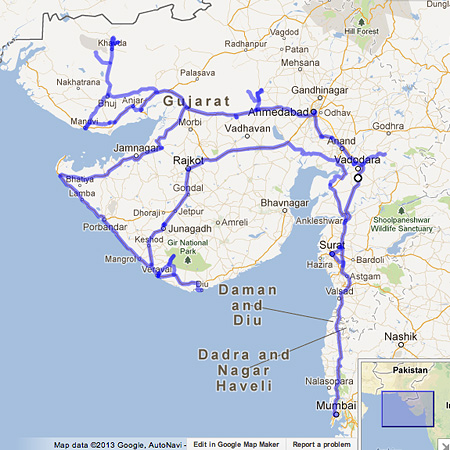
Trip Meter
Bombay 0 -
Navsari 261 -
Bharuch 368 -
Jambusar 418 -
Bamangam 456 -
Bagodra 569 -
Rajkot 730 -
Jetpur 805 -
JUNAGADH 837 -
SOMNATH 943 -
GIR 990 -
DIU 1098 -
Mangrol 1241 -
Porbandar 1334 -
DWARKA 1442 -
Jamnagar 1594 -
Malia 1739 -
Bhuj 1882 -
SAFED RANN 1970 -
Hodka 1997 -
Khavda 2030 -
KALA DUNGAR 2072 -
Bhuj 2163 -
MANDVI 2237 -
Gandhidham 2345 -
Malia 2450 -
Dhrangadra 2525 -
Malwan 2569 -
Dasada 2600 -
ZAINABAD 2609 -
Ahmedabad 2736 -
Baroda 2871 -
CHAMPANER 2926 -
Baroda 2977 -
Kamrej 3130 -
Surat 3145 -
Vesma 3185 -
Talasari 3303 -
Bombay 3450
[Numbers beside the place are trip meter readings in km at that point. Places in bold indicate sight-seeing destinations.]
Highlights
- The quirky city of Junagadh and fantastic keema samosas and mutton curry
- The seaside temples of Somnath and Dwarka
- Spotting lions in the wild in Gir National Park
- The quaint town and white churches of Diu
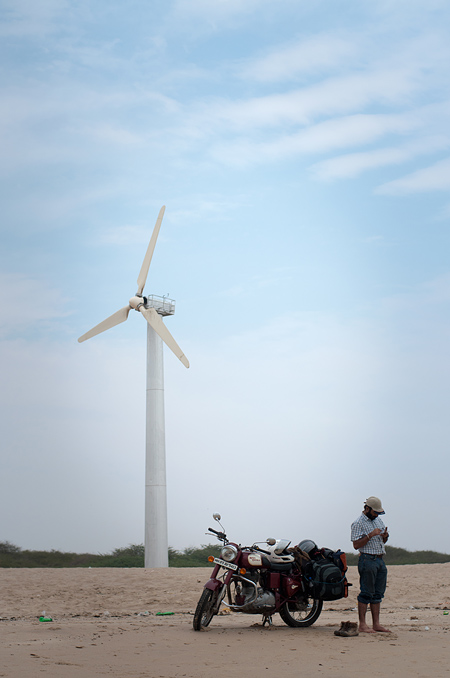
- Riding through windmill country of Porbandar-Dwarka and salt pans of Malia-Bhachau
- The Safed Rann and Kala Dungar in Great Rann of Kutch
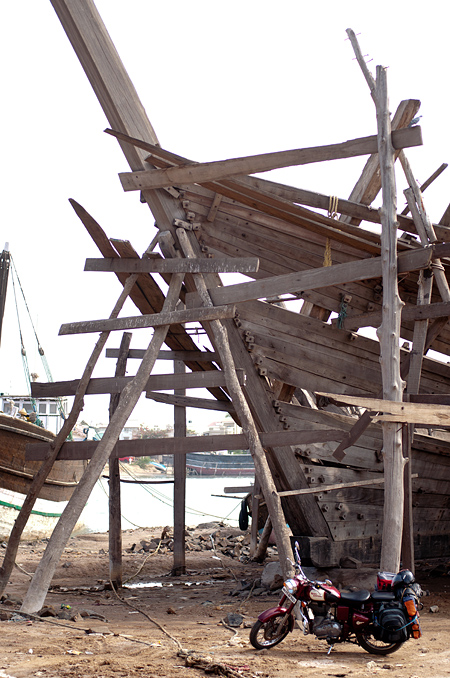
- The ship building yard and blue-green beach of Mandvi
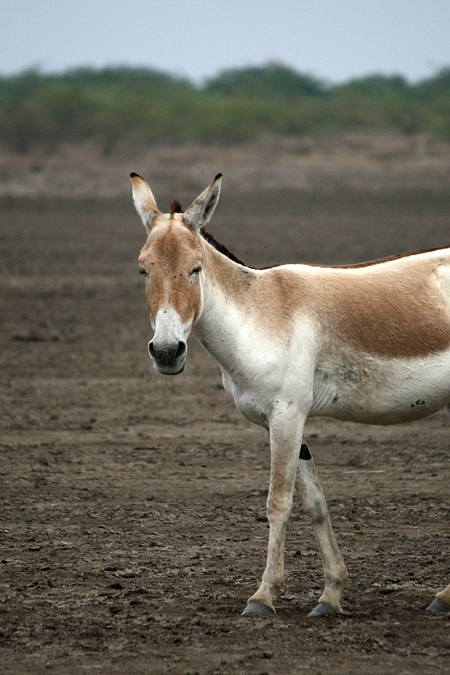
- Spotting the wild asses in Little Rann of Kutch
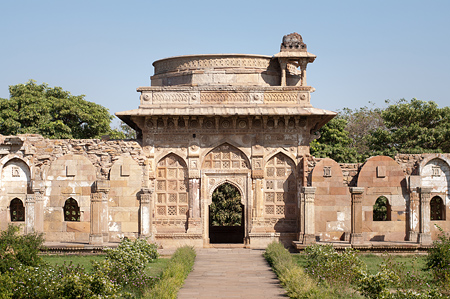
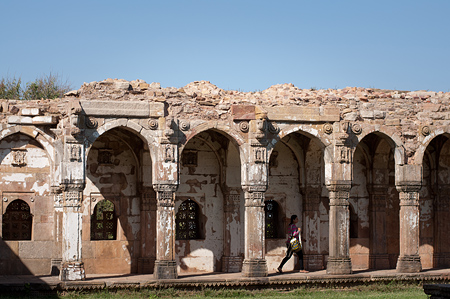
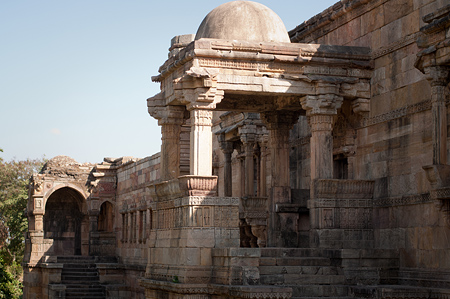
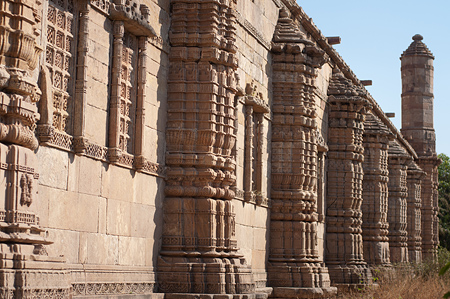
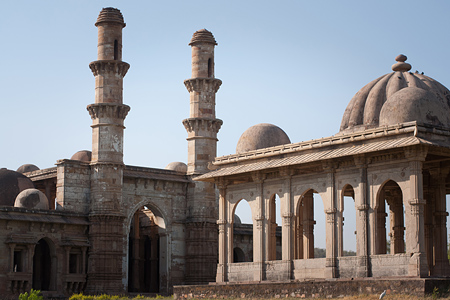
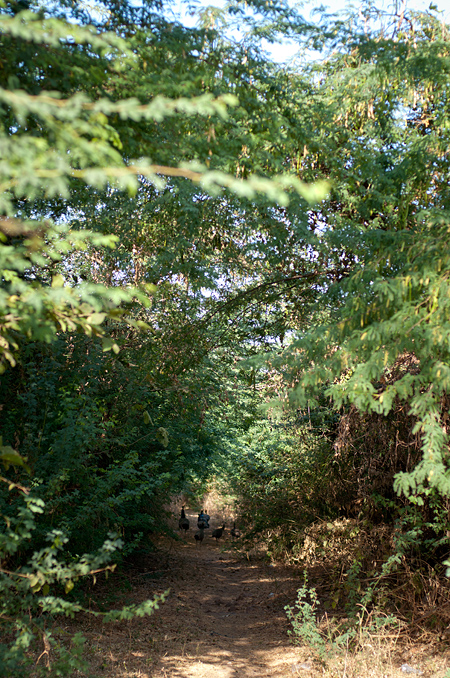
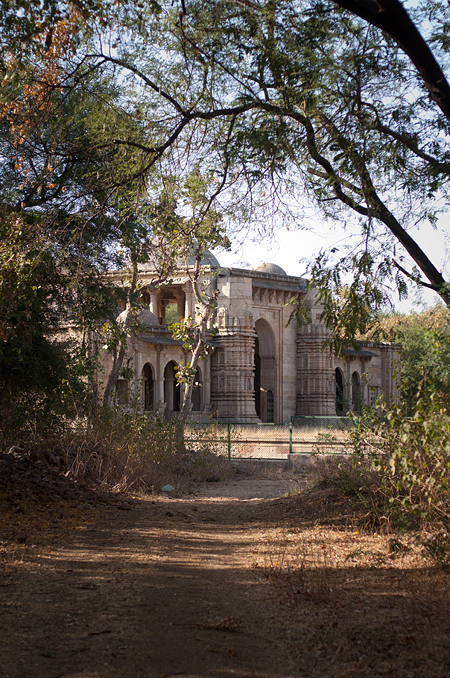
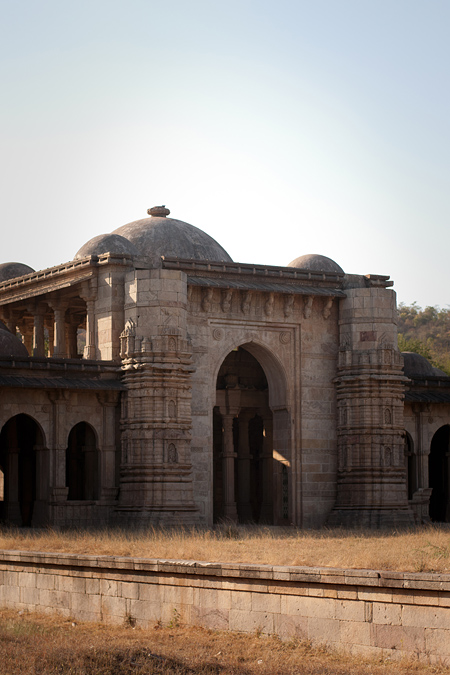
- Finding 15th and 16th century mosques surrounded by thorn bush forest in world heritage archaeological park of Champaner
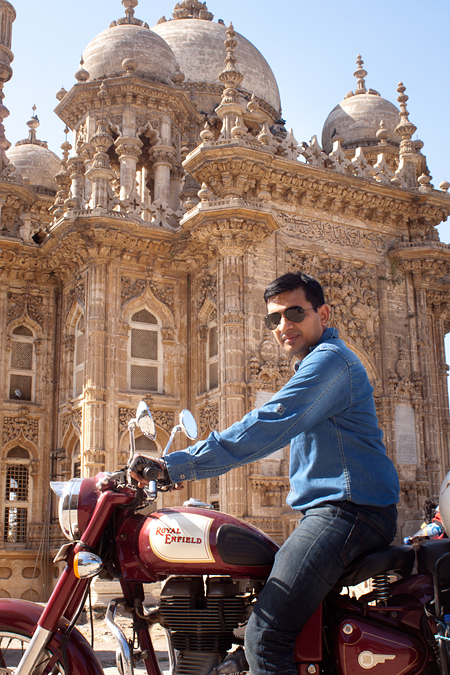
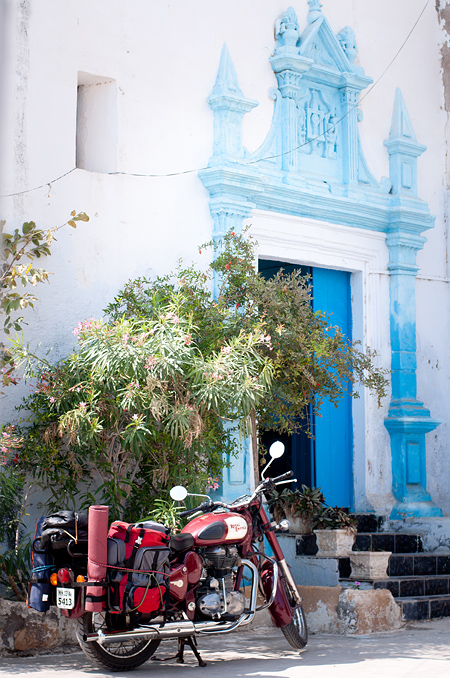
- 9 days and 3450 kms on the road with Royal Enfield Classic 500
DAY 1 - The long ride out of Bombay Route: Bombay - Navsari - Bharuch - Jambusar - Bamangam - Bagodra
Distance: 569 km
Trip: 569 km
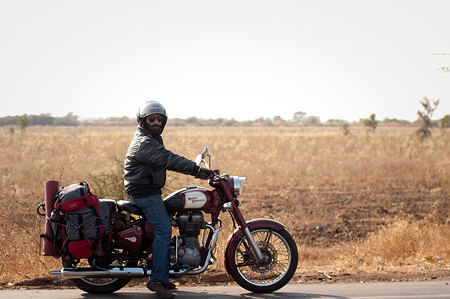
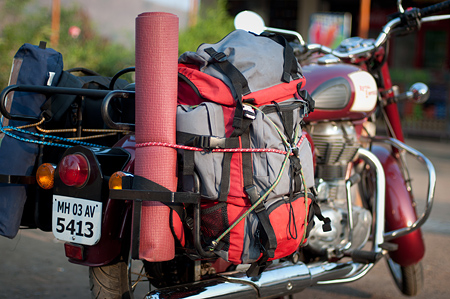
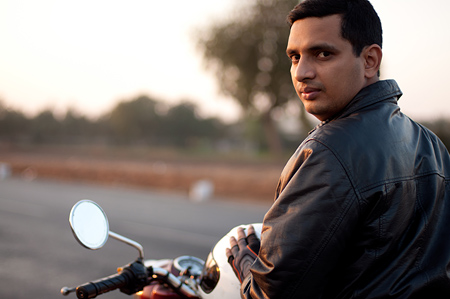
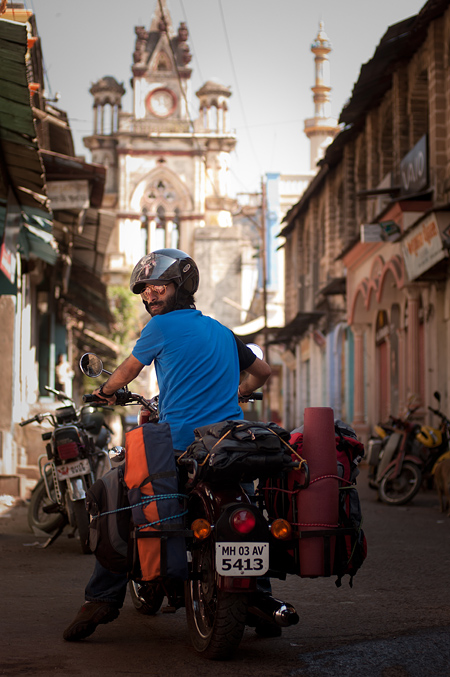
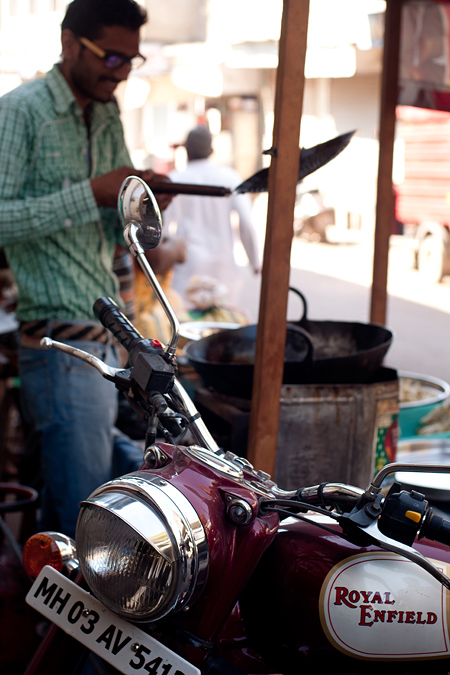
Night: Government guest house, Bagodra Jassi and I had been planning a ride in Kutch for a bit. Our initial plan to was to load the bike in a train in Bombay and take it to Okha Port. Ride it in Saurashtra and Kutch. Load it again in Bhuj and bring it to Bombay. We booked the train tickets. But like all well made plans, we cancelled the tickets a day before departure and decided to ride all the way from Bombay to Saurashtra to Kutch and back. Before the ride, I prepped up my bike - got it serviced, changed the chain, fitted it with a 'Ladakh Carrier' for luggage and bought elastic fasteners. We started riding at 6 am on a Saturday. It was dark when we hit the JVLR and Western Express Highway out of Bombay and the sun would not come up for another 60 mins. We stopped for breakfast with 80 kms on the odo and Jassi took over the riding. The next stretch between Dahisar and Talasari was a beautiful 6 lane road twisting through the hills. The sun was coming up and hills lit up in a pink glow of morning light. We had a long ride ahead of us and we wanted to clock in as many kilometers as possible on the first day. The road remained 6 six lane. Crusing at 80 kmph was easy. But the scenery in the Vapi-Valsad-Navsari stretch, with industries and towns lining both sides of the highway, was at best mundane. We took the Surat bypass and stopped for lunch on a highway-side dhaba (Cashew curry was a first for me!). Outside the dhaba, we checked directions with a shopkeeper selling auto spares. He asked us to branch off at Bharuch and ride through Jambusar, Bamamgam, Borsad, Vataman to Rajkot. The smaller roads were much more fun and interesting than the six lane we left behind. Jambusar was dotted with many newly built Islamic schools and orphanages. At Bamamgam, the terrain changed from flat to loose sand hills. We rode through a beautiful dusk in the Borsad-Vataman stretch that seemed a remote land of nothing. I think we were done riding for the day with 500 km on the odo. But had to ride another 70 km in dark to get to Bagodra to get any possible acco. Bagodra was on the intersection of two highways and had a couple of "guest houses". A boy showed me a room in the first guest house. I asked him if the sheets were clean. "New bedsheets," he said. "Then what is this?" I asked him pointing to bird shit on bedsheet. "So which room do you want? 103 or 104?" he asked me brushing aside the minor aberration. The next guest house was equally disgusting. The previous guest had stashed his underwear beneath the pillow and forgotten to grab it in his hurried checkout. By now, Jassi was ready to pitch the tent we were carrying on the next level patch of ground he found. A chaiwala told us about a government guest house near the Bagodra bus station. It was a building you could easily miss. A single ground storey inside a large dusty courtyard. Outside the entrance door was a board: WATCHMAN KOTTER
RING THE BELL Even before I could ring the bell, a guy emerged from the quarter who liked the Daddu of Namak Halal. "We want a room," I told him. "No room," he said in a way that did not mean a no. "I am sure you have one," I coaxed him a bit. "Yes, but that is for government officers. Are you a government officer?" It was 10 pm and it didn't seem like anybody was going to check in. "Well, er .." "Where are you from?" he continued. "Bombay," "Family or couple?" "Two guys," "Good. Couple not possible." When I finally thought I had the room, he asked, "What vehicle do you have?" "A bike," "No, no. No room for people with bikes." Again I had to persuade him how we were a couple of guys riding from Bombay to Somnath and it was our own bike and not a stolen one. "Three hundred rupees," he said. I said okay in a heartbeat. It was a large room with an attached bathroom. Two single beds with clean sheets, pillows and blankets. The peeling plywood paneling inside the room reminded me of movies when Vinod Mehra was still in vogue. Daddu gave us a coil heater for hot water. Clean sheets, no wild animals or thieves, and hot water. What else do you need to classify it as luxury?
DAY 2 - Exploring the ruins of Junagadh and the seaside temple of Somnath Route: Bagodra - Rajkot - Jetpur - Junagadh - Somnath - Sasan Gir
Distance: 421 km
Trip: 990 km
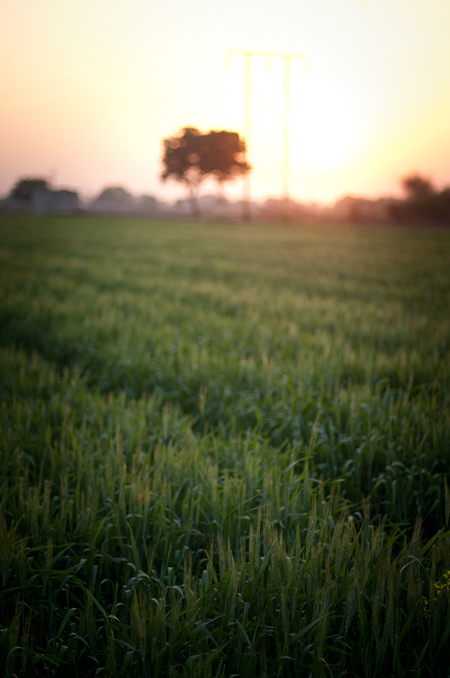
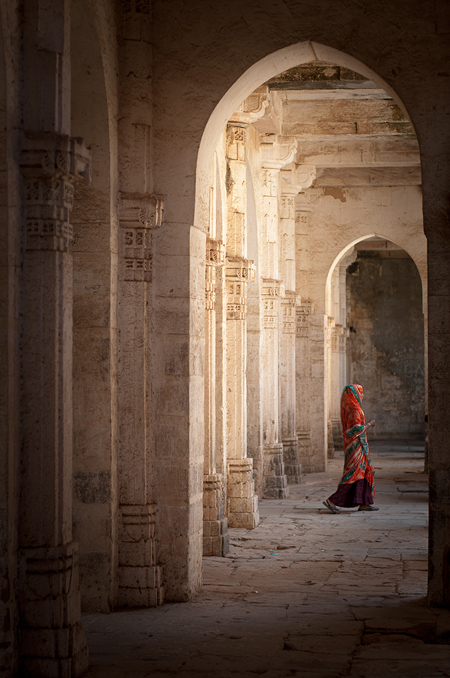
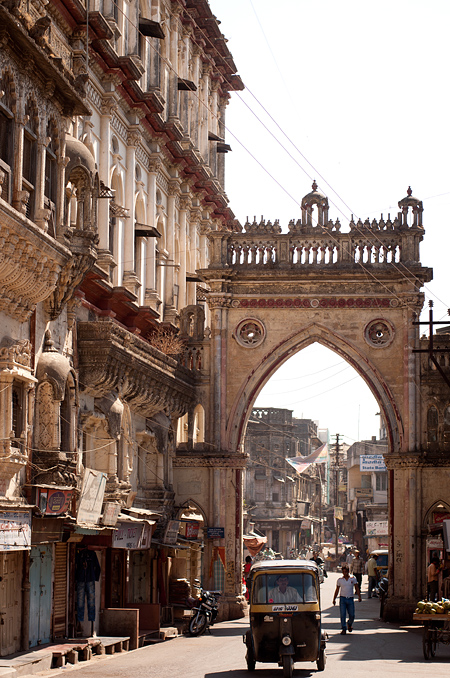
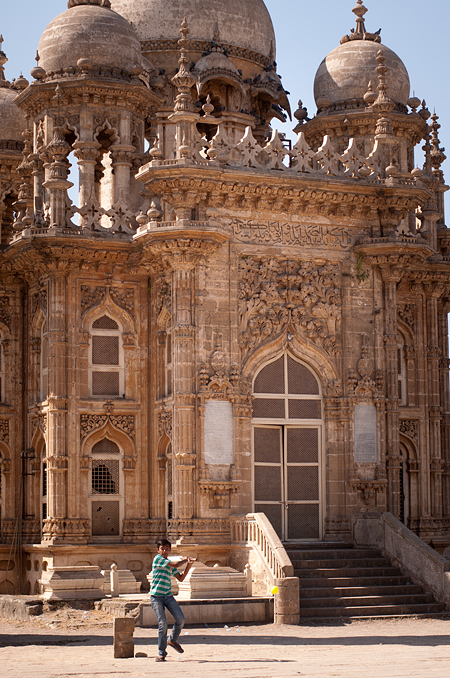
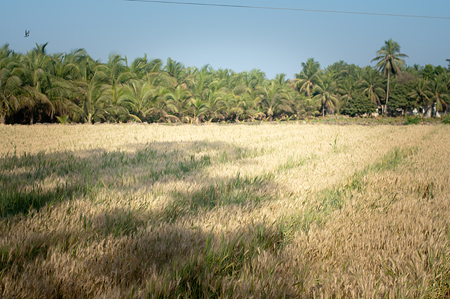
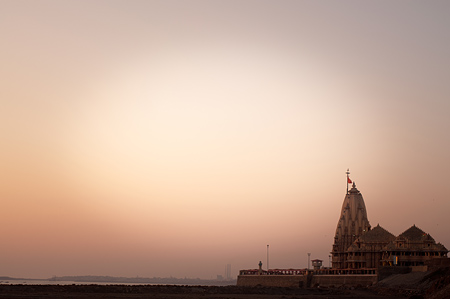
Night: Umang Hotel, Sasan Gir After a pretty good first day, we hit the road again at 6.30 am. This stretch was part of the 6 lane Ahmedabad-Rajkot highway that ran straight and flat like a ruler. Cruising at 80 kmph was effortless and only gentle lane changes were needed to overtake or let others pass. We were riding west, and when the sun came up, we caught its glint in the rear view mirror. A crisp chill, lovely morning light and beautiful fields on either sides made an enjoyable ride. Breakfast was fafda, kadi-pakoda and chai near the temple of Chotila. Beyond Chotila, the 6 lane curved right to Kandla Port and we moved ahead on a 4 lane to Rajkot. After riding through Rajkot and Jetpur, we reached the edge of Junagadh. We asked a guy sitting in a roadside mechanic shop for directions to the fort. "Keep riding straight," "Okay," "City gate. Go straight. On your right, Mahabat Maqbara. Go straight. At the chowk, on your left you will see a 'No Entry' board." "Okay," "That's it. Just go inside that lane till you reach Uperkot." After passing through the city gate, we did spot the Mahabat Maqbara on our right. On our left were some dilapidated Raj-era buildings before we hit a chaotic chowk. The 'No Entry' board was indeed there. A narrow street through a bustling bazaar led us to the foothill of Uperkot. The Uperkot is a 4th century BC fort used by several dynasties including Mauryans, Solankis, Gujarat Sultans, Mughals and finally the Babi Nawabs (under the suzerainty of British India). The fort included 2nd century AD Buddhist caves, a couple of wells, a Jama Masjid with crumbling ceiling and the Nilamtope cannon (brought by the Turkish allies of Nawab to fend off the Portuguese attack on Daman and Diu). The city outside the fort was an orthogonal maze of narrow streets with several crumbling havelis in advanced state of decay. The Nawab's palace sat in the city square and now housed State Bank of India and a museum. We took some local advice to find the Bangali Restaurant for non-veg food. Outside its grim entrance was a cart selling meat samosas. The inside was a tall room with four different coloured walls and a scatter of tables. Soot over the years darkened the ambience. "Try the samosas. We have mutton and we have bada (beef)," our enthusiastic waiter recommended. "Are they good?" "Try them once. Tabiyat khush ho jayegi." (It will lift up your spirits.) "Okay, we'll have the samosas. And we will also have .." "Let's see about that later," he said and swished away. Soon, a plate of hot samosas arrived in front of us. With my first bite, I knew I had never eaten anything like this before. The qeema was fully cooked in whole spices and wrapped in rumali roti before being deep fried to golden crispness. I could feel the wholeness of cinnamon and cloves hit the roof of my mouth. Mutton curry followed the samosas. Tender lamb shank that seemed like it was cooked over ages, neatly topped with a sprig of coriander, and a side of fresh onions and lemon wedges. One morsel in the mouth and we knew we were fans of Bangali Restaurant for life. I can safely say the mutton was one of the top dishes in my book that I have eaten out. After lunch, we came back to Mahabat Maqbara. The mausoleum looked like a mash between fine Islamic workmanship and Disneyland designs. Several domes sat on top of the tomb, intricate lattice work adorned the walls and spiral staircases wrapped around the minarets. The scale was nowhere close to grand. But the structure had its own charm, or rather, quirkiness. After saying goodbye to Junagadh, we started riding towards Somnath. As we neared the coast, the dry dusty landscape changed to wheat fields and palm groves. We reached the temple town a little before 6 pm. The sun was a pale orange disc and was beginning to sink towards the sea. The Somnath temple sitting on the edge of the sea blushed with a young pinkness. A friendly hotel guard agreed to watch our bike and luggage while we did the darshan in the temple. Inside, the evening aarti was sung by the zestful devotees with vigour to beats of cymbals and drums. That night, we rode from Somnath through Talala to Sasan Gir and stayed at the Umang Hotel (Rs. 400/night).
DAY 3 - Spotting lions in the wild in Gir National Park; Sitting on terrace of St Thomas Cathedral and soaking in Diu Route: Sasan Gir - Diu - Mangrol
Distance: 251 km
Trip: 1241 km
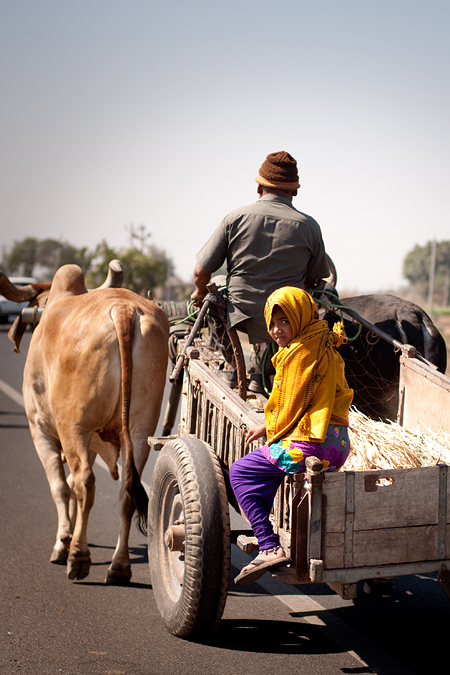
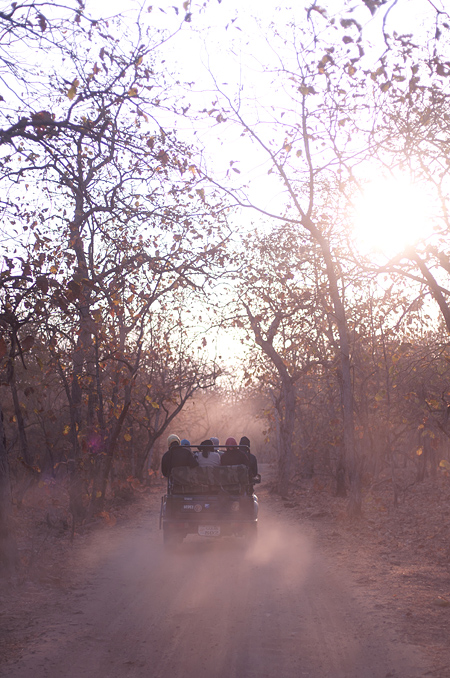
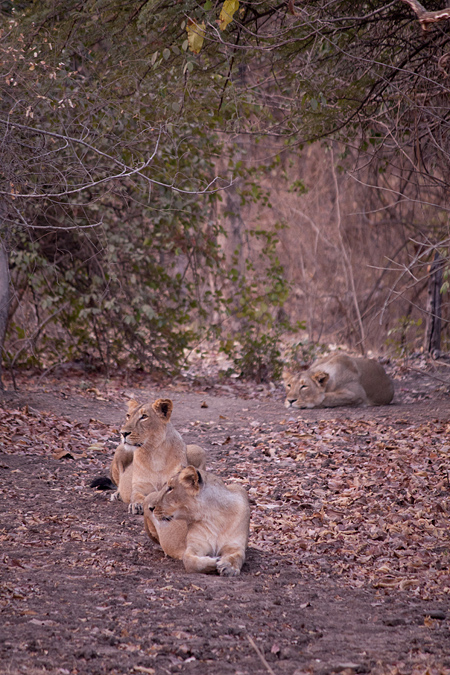
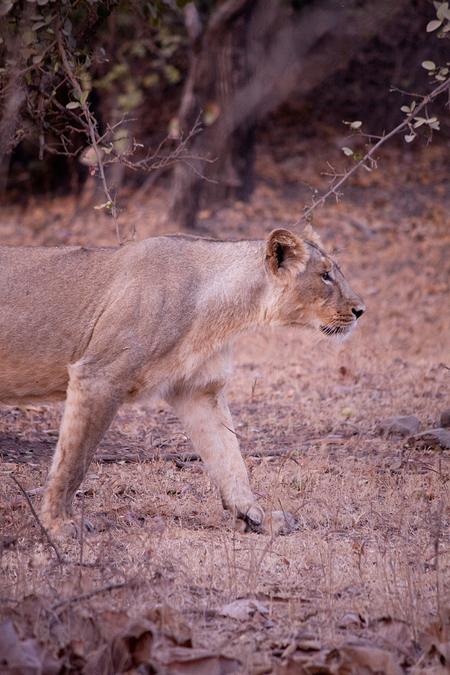
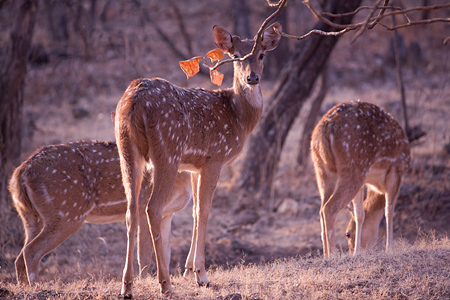
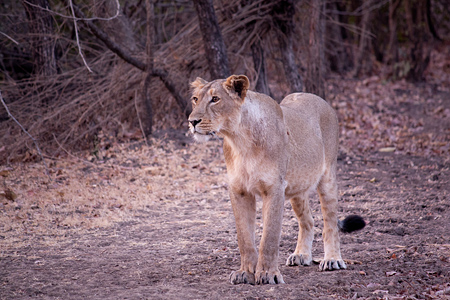
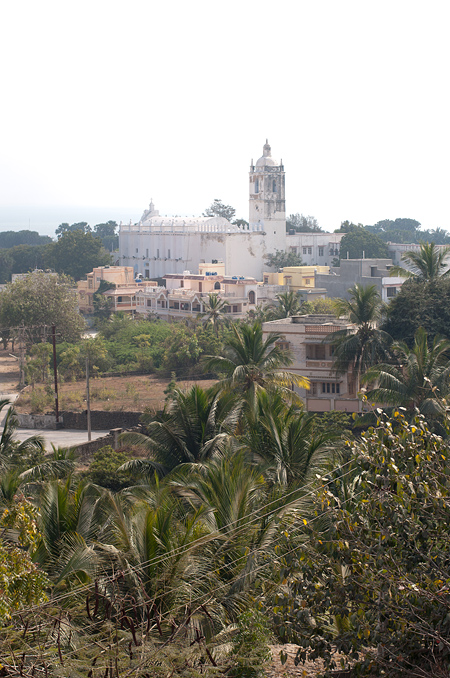
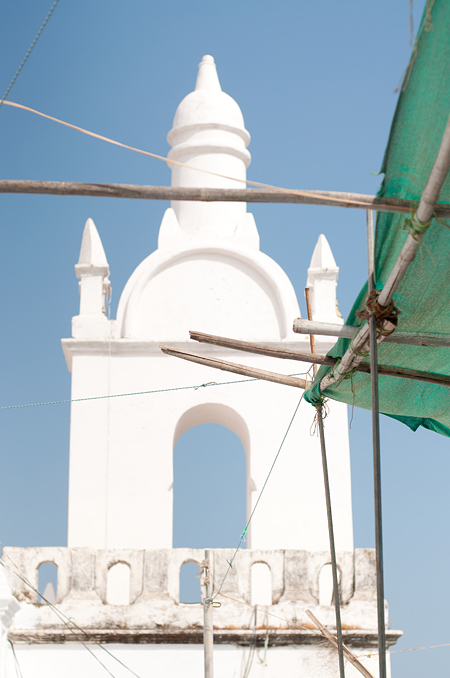
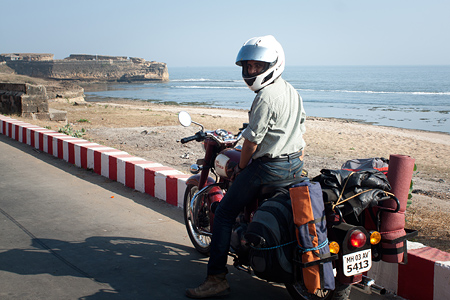
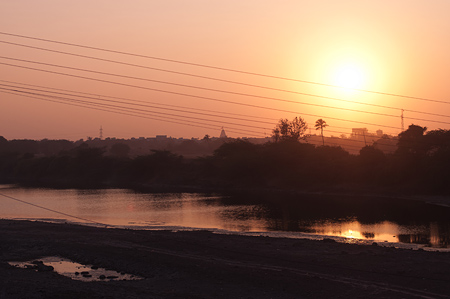
Night: Shakti Lodge, Mangrol The alarm went off at 4 am. "Only one five permits will be given. One five. You should queue up at the forest office gate by four thirty," our hotel manager had told us the previous night about safari permits. Gir National Park is the last reserve and home of the pure Asiatic Lions (Panthera leo persica; Conservation status: EN). Three safaris are conducted every day in Gir - one at dawn, one in the morning, and a third one in late afternoon. Permits are given to 30 vehicles in each safari (15 in advance and 15 in current). A permit costs Rs. 400 per vehicle. The fee for a compulsory guide is Rs. 150 and camera is Rs. 100. Renting a Gypsy costs Rs. 1000 (can seat 6). So that's Rs. 1650 for a safari for 1-6 people. There are 7 routes/zones and are decided randomly. When we reached the gates at 4.30 am, we were expecting a few souls to be around. There were none. We sat there sipping tea wondering if we really needed to come here this early. But at 5 am people suddenly emerged from different corners and we were already #4 in the queue to the window (how, I don't know!). People arriving at 5.30 am were already outside the 15 permit buffer. The office window opened at 6 am sharp and issued us a permit and assigned a naturalist/guide, Yaseen, for the game drive. Many locals have Gypsys that you can hire for the game drive. Our hotel owner had one and we rented the same. We drove into the park on route #7 at around 6.45 am. Yaseen claimed to be guiding visitors for 14 years but was boring as hell. "Welcome to Gir. There are x lions, y spotted deers, z nilgais, ..." he rattled off like a tape. I asked him whose territory was Route 7. "There are 2 males in Route 1, 1 male in Route 2, a pride in Route 4 ..." "And Route 7?" "1 Female," Yaseen mumbled. Well, my heart sank a bit. Given my previous experience of 4 game drives and 0 sightings of the big cat in Ranthambore, I was a bit apprehensive of what lay ahead for us here in Gir. Not being able to watch a lion in the wild would be a bit of a disappointment. And Yaseen's stupid chatter and stories about how he would do his "setting with the rangers" and "take risky" (sic) to show visitors the lions further irritated me. A good naturalist will show you the jungle and wildlife will happen to you. That's part of the thrill. We focussed on the road. The forest looked beautiful in the morning light. Shafts of light beamed from between the tree trunks and branches. Spotted deer as easy to, well, spot. Forest rangers had conducted a safety fire to burn out excessively dry vegetation on the edges of tracks. We crossed other Gypsys tumbling around the forest looking for pug marks or calls. No one had a sighting yet. We were not driving through a stretch that was shared by Track 4 and Track 7. 45 minutes into the drive, our driver hit the brakes. There they were - three gorgeous lionesses slouching in the woods. Another Gypsy that followed us also stopped. We saw the lions with hushed breaths. After lazing around for about 20 mins, the lions were bored of us staring at them. One after the other, they got up and walked deeper into the woods. Once the lions disappeared, the rest of the safari time was spent driving on the designated track route and covering the sanctuary. Riding out of Gir, I thought man cannot be another animal. Animals hunt or gather, eat, mate and bear offspring. Man learns algebra, calculus; invents mutual funds, life insurance, CDOs; builds roads, railways, windmills; goes through dates, breakups, marriages, divorces; wages wars, drone attacks, terrorist strikes; changes the planet like no other living being does. How is it even fair to say man is another animal? After a breakfast of aloo parathas and methi theplas, we were ready to hit the road north-west to Dwarka. But the allure of Diu about 110 km south-east of Gir was too enticing to give up. So we said we will get to Dwarka when we get to Dwarka and started riding south-east. After a couple of hours of riding through beautiful country roads, we were in Diu. Diu itself had lovely roads (got to love union territories!) and town seemed in no hurry to move. The town was a mix of brightly colored new homes with fancy lines and a pastel colored old ones with white columns and window sills. Towers of white-washed cathedrals rose above the palm skyline. There was the huge St Pauls, the main church of Diu; the St Thomas, now Diu Museum; and St Francis of Assisi, now a hospital. We went around the twisting circular lanes till we found, with much difficulty, the place we were looking for - Hotel Sao Tome Retiro - which was actually housed on the side terrace of St Thomas. A steep flight of blood red stairs took us to the terrace where a greenhouse sheet tied on some bamboo poles created a makeshift shack. The terrace offered fantastic views of Diu town, the fort, other cathedrals and the sea beyond. And nothing better than a cold beverage on a bright sunny afternoon to top it up. For lunch, we headed to O'Coqueiro, a quaint restaurant in the front-yard of an old bungalow where we met a most interesting entrepreneur - Kailash Pandey, the owner of the restaurant. We got chatting with him. Kailash was a handsome man with a warm smile, his almond eyes giving away his Kumaon origin. He moved to Diu fifteen years ago and has been in the restaurant business since. Every year he escapes to his native hills when the heat becomes unbearable in the Diu summer. "Why did you name your restaurant O'Coqueiro?" I asked him. "I came here and looked around and I saw coconut trees everywhere," Kailash said. "I asked my landlord, 'How do you say coconut in Portuguese?' and he replied coqueiro. I had the name for my restaurant - O'Coqueiro." It was hard to say goodbye to Diu. But if we stayed the night here, we would have to drop Dwarka from our trip before we proceeded to Kutch. So around 4 pm, we left Diu and started riding towards Dwarka. Roads for most part were under construction and made riding inconvenient. At 7.30 pm, we decided to stop riding and stay the night in the town of Mangrol. One of the two lodges in the town offered us a room at Rs. 350/night.
DAY 4 - Riding through windmill country of Porbandar-Dwarka to the edge of Gujarat Route: Mangrol - Porbandar - Dwarka - Jamnagar
Distance: 353 km
Trip: 1594 km
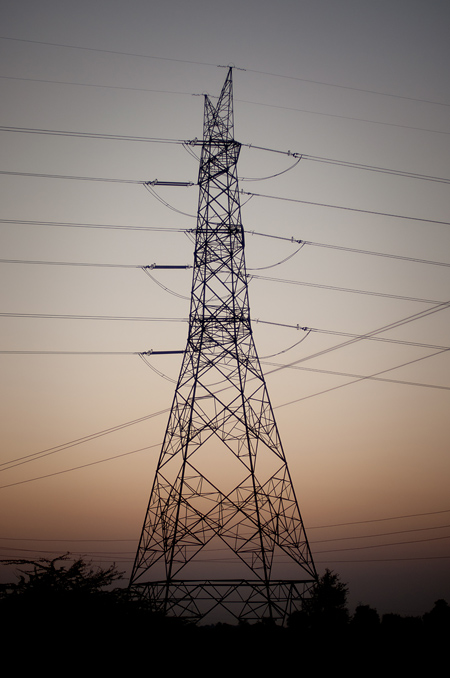
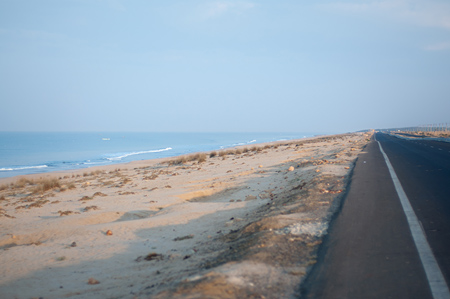
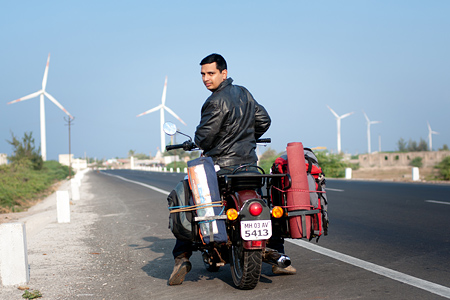
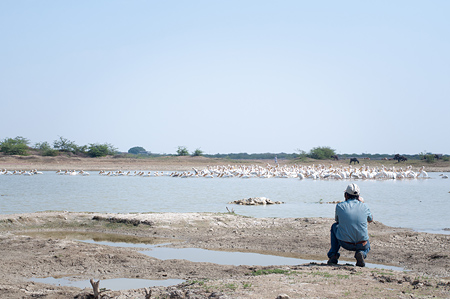
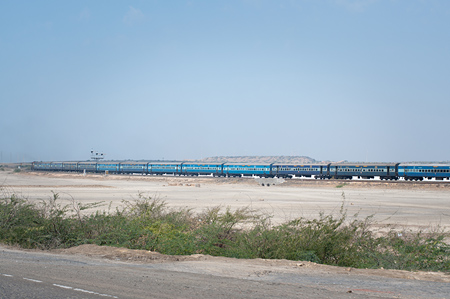
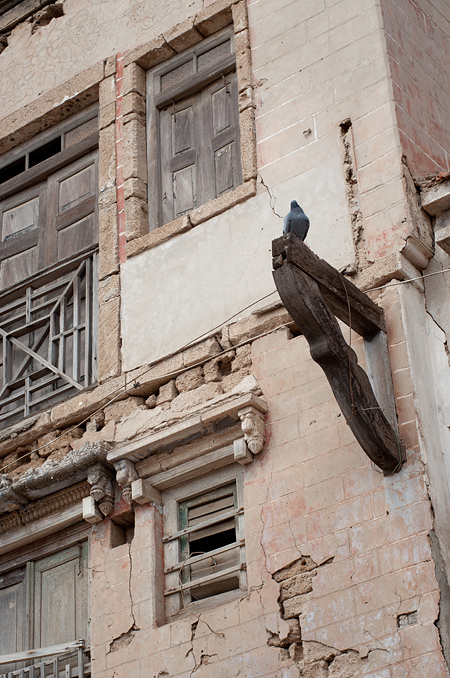
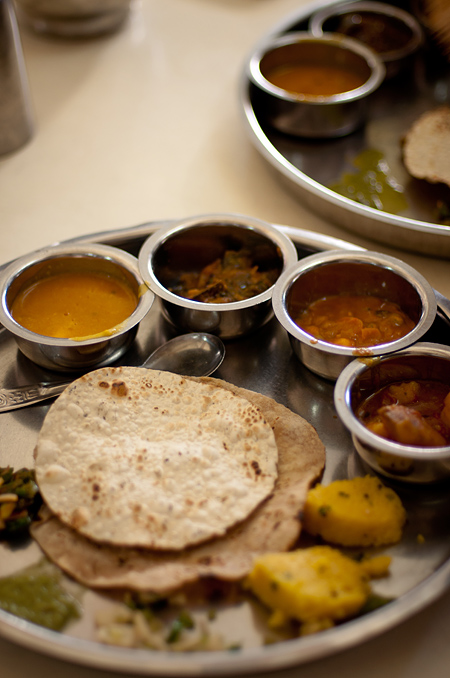
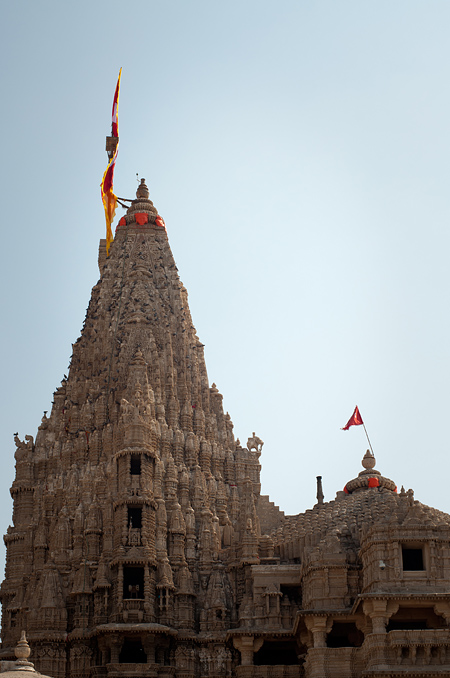
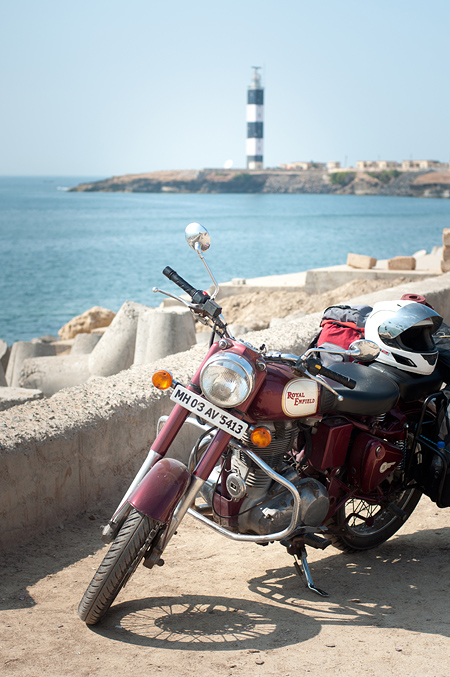
Night: Gurudwara, Jamnagar Our day of riding started at 7 am in the morning. The previous night, we had gone to see a bit of the Mangrol town after dinner and were astounded by what we stumbled upon. The town's main artery was a wide road and had several glimpses of magnificent havelis with intricate balconies and gigantic doorways. The colonies off the road had planned orthogonal streets that housed four and five storey buildings, all about 100 years old. Now a bit in state of decay, Mangrol made a very interesting town. Not lavish enough to make it to the Lonely Planet's India guide. Not drab enough to make it just another dusty Indian town. Who were these people? What was the industry in Mangrol that supported it? What changed in the last half century? When Shashi Tharoor says India is not an under-developed country but a one in advanced state of decay, this is perhaps what he means. Intrigue is travel. So we rolled out of Mangrol to hit possibly the best stretch of ride so far. We were riding north to Porbandar and beyond to Dwarka. The weather was perfect, just a hint of cold. Blue blue sky and a smooth tar road. And then came along the ocean on the west and wind mills on both sides of the road. I was glad I have the riders seat. I would have been very jealous if I was pillion on this stretch. We stopped for breakfast at Porbandar. The windmills continued on both sides of the road .. gigantic 3 blade fans slowly rotating atop a massive tower. The landscape was getting more remote with every kilometer. There is not much between Porbandar and Dwarka. The arid land won't grow much except windfarms. Waterholes attracted tonnes of birds. This was as remote as it could get for good birding habitats. The bird watchers would be thrilled on this stretch. Train tracks ran alongside the highway. Chasing a train as we cut through a desert like terrain, we rolled into Dwarka for lunch. The lord himself was (or at least his caretakers were) busy in his siesta but his spectacular temple was there to see. The present day temple was built in 6th and 7th century (Hello! Taj Mahal was built ten centuries later in 17th!) and it has stood there on the edge of the sea for about 1400 years. A great Gujarati thali later, we went to the bund. A blue sea flickered back at us in the afternoon soon. A white lighthouse stood off the shore. Somewhere in the range of its lights must be the submerged city of Krishna's Dwarka. I am guessing this was the western most point I would experience in India for a while. From Dwarka, we rode east in the late afternoon till we reached Jamnagar. As we entered Jamnagar, a guy in blue overalls rode alongside on a Yamaha and gave our Royal Enfield a thumbs up. "Where are you guys coming from?" he asked. "Bombay," Jassi replied. "Woah!" "You are a pilot," Jassi pointed to his badge on the overalls. Jamnagar had an Airforce station. "Yes," he answered reluctantly. "What plane do you fly?" "MiG-29," he replied and went his way. "Woah!" Our stay for night was in a Gurudwara in Jamnagar. Great, the roadtrip just got better! Donation to the Gurudwara: Rs. 200. We stepped out for dinner and tried the anda roti off the street carts and topped it up with ice cream from Shree Ram Dairy.
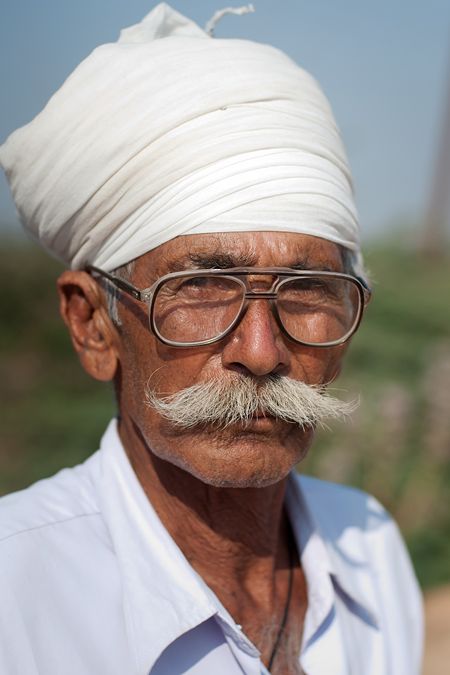
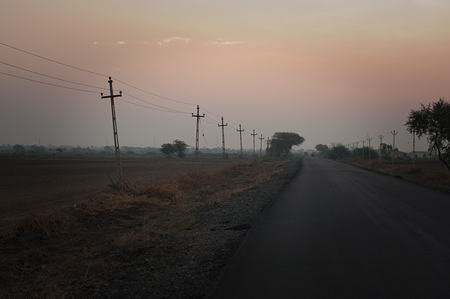
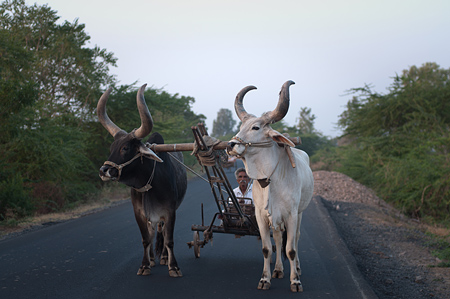
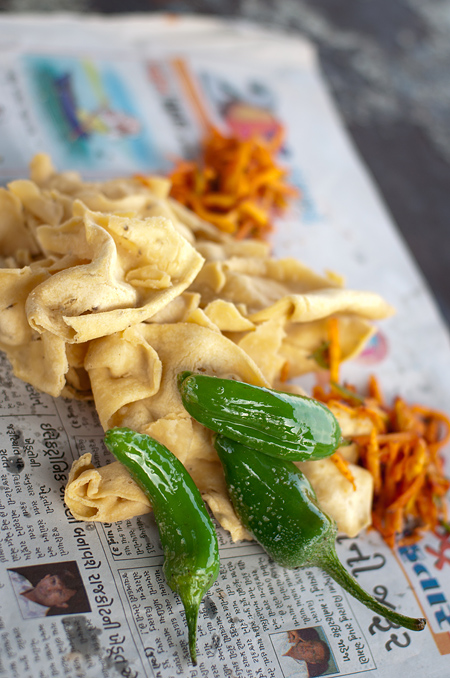
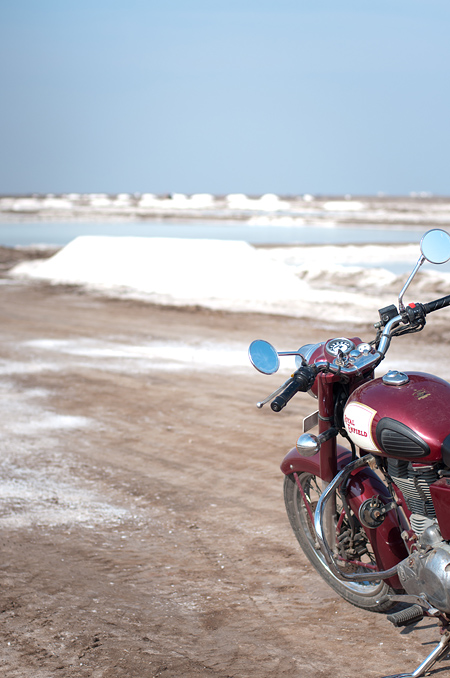
DAY 5 - Riding through the salt pans of Malia-Bhachau and the Banni grassland of Kutch to Safed Rann Route: Jamnagar - Malia - Bhuj - Safed Rann - Hodka
Distance: 403 km
Trip: 1997 km
Night: Couch surfing with a school teacher, Hodka
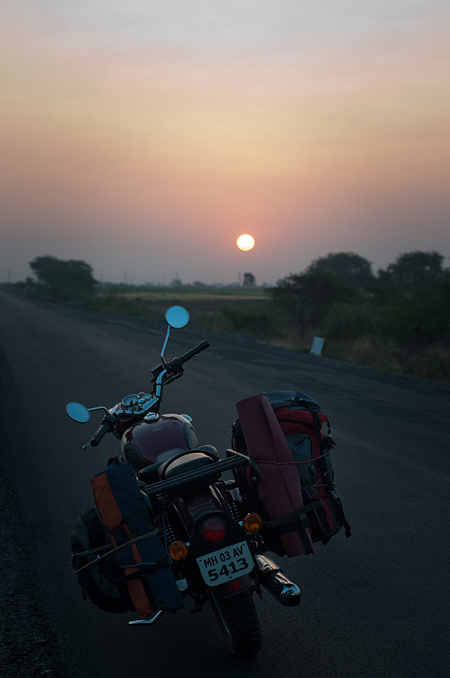
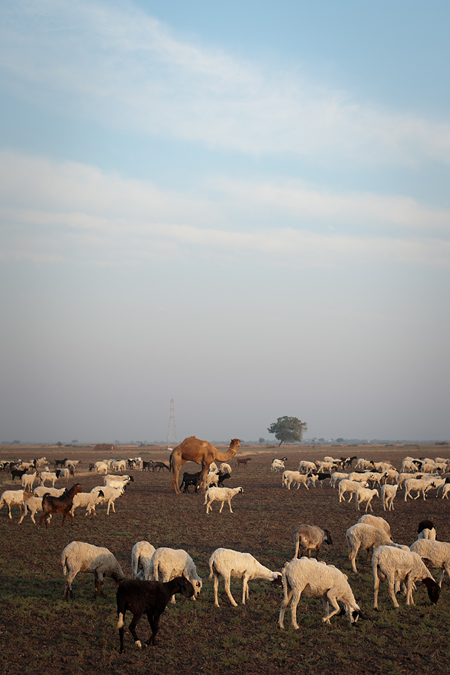
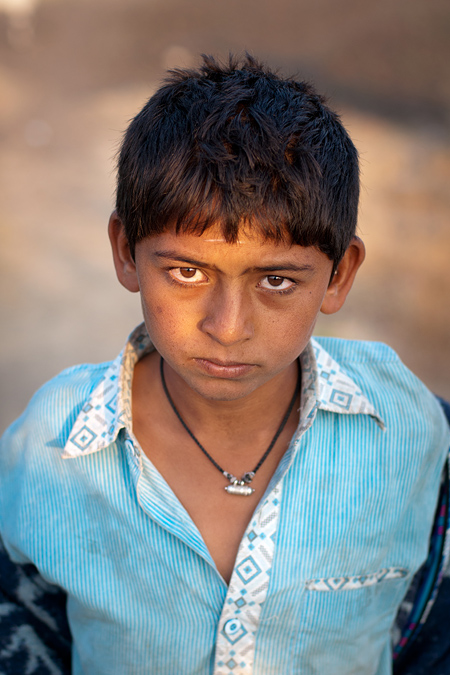
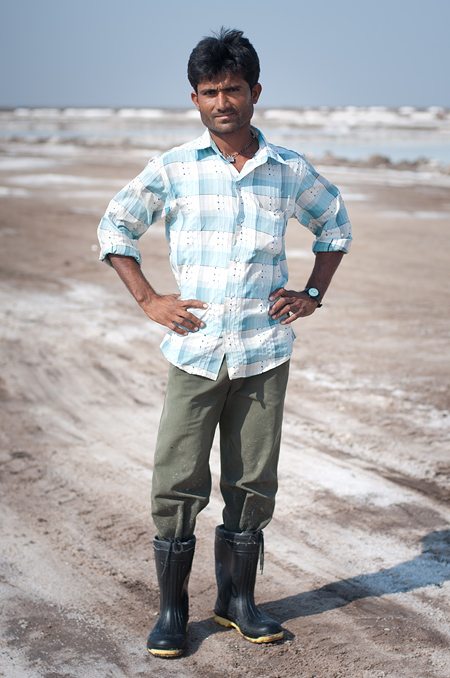
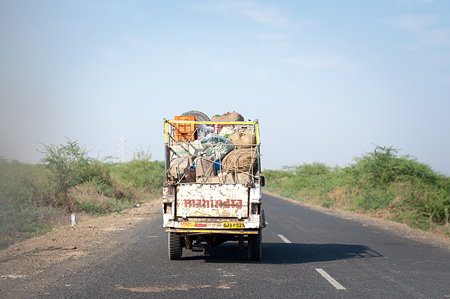
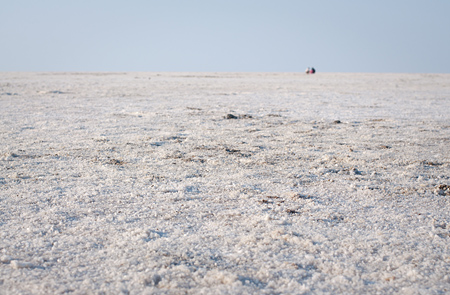
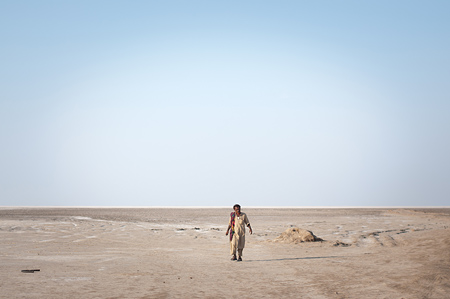
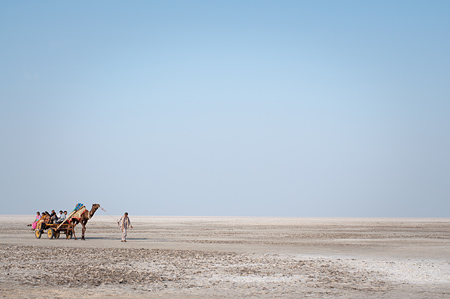
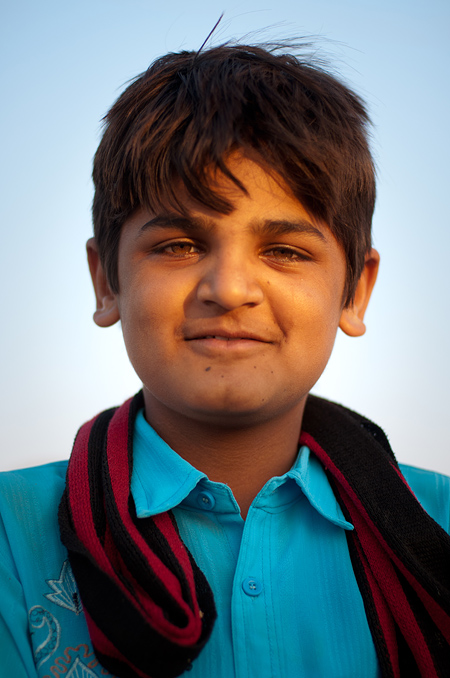
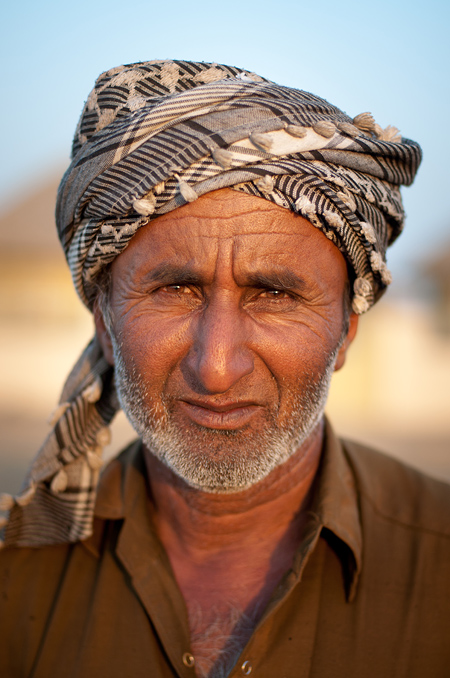
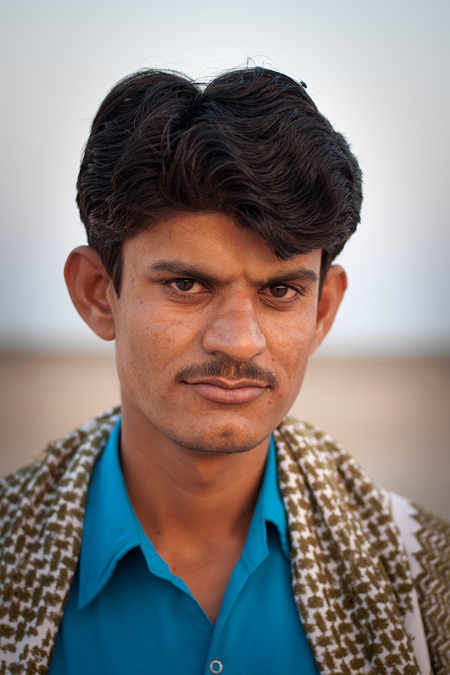
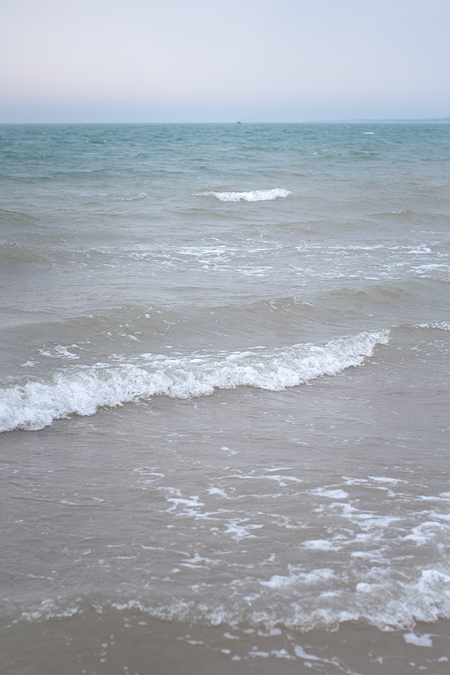
DAY 6 - Exploring Rann, the blue-green beach of Mandvi and its ship building yard Route: Hodka - Khavda - Kala Dungar - Bhuj - Mandvi - Gandhidham
Distance: 348 km
Trip: 2345 km
Night: Gurudwara, Gandhidham
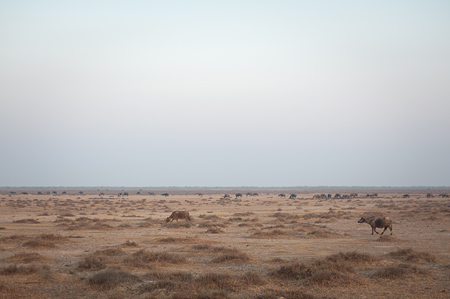
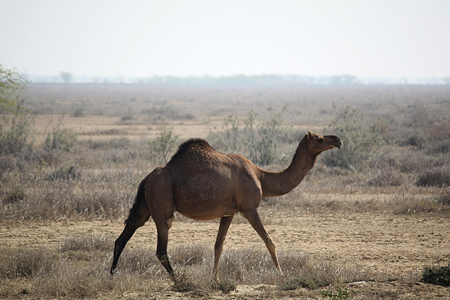
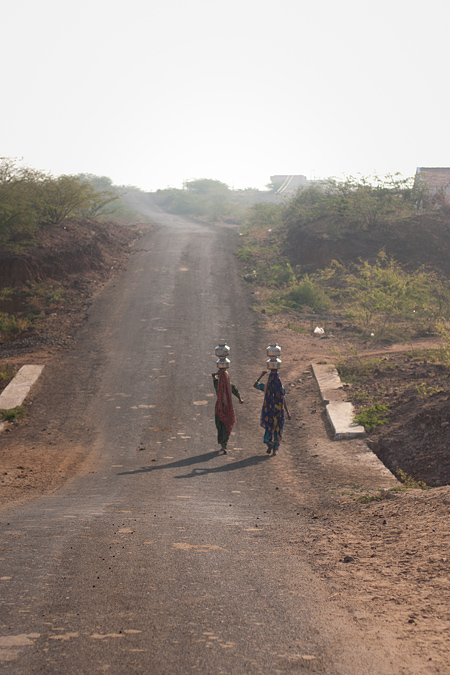
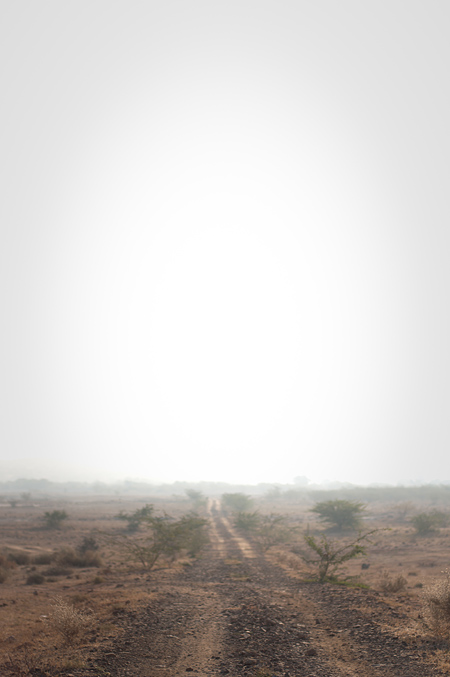
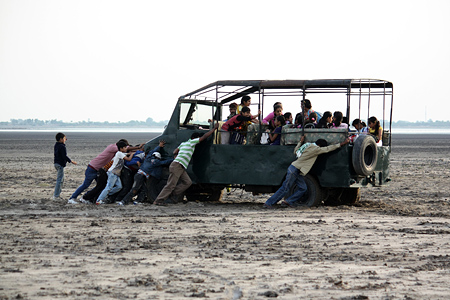
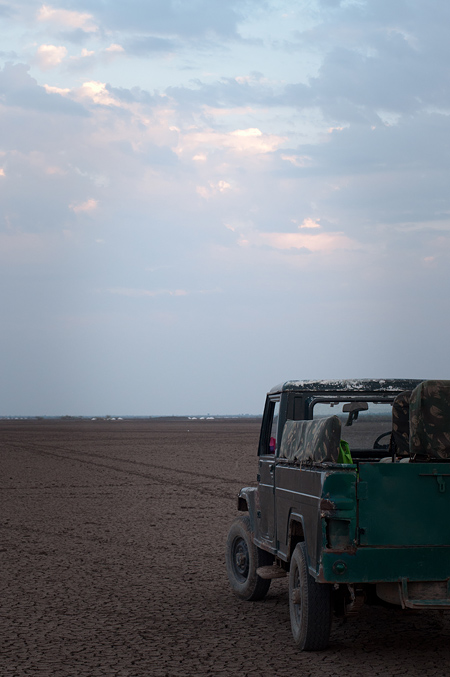
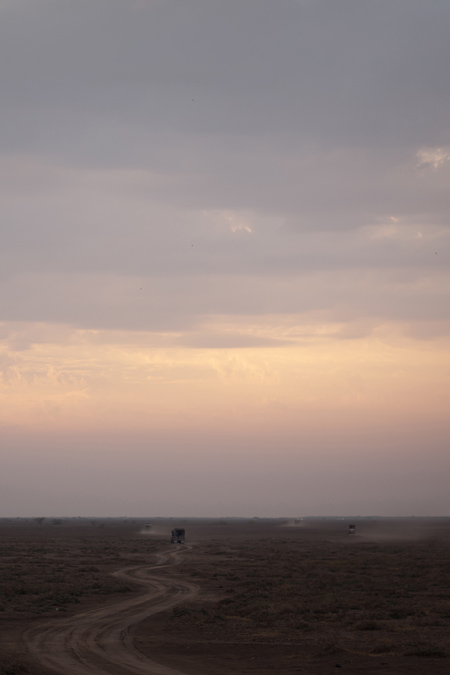
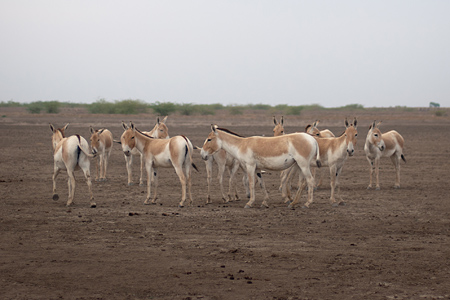
DAY 7 - Spotting the wild asses in Little Rann of Kutch Route: Gandhidham - Malia - Dhrangadra - Malwan - Dasada - Zainabad - Ahmedabad
Distance: 391 km
Trip: 2736 km
Night: Hotel, Ahmedabad
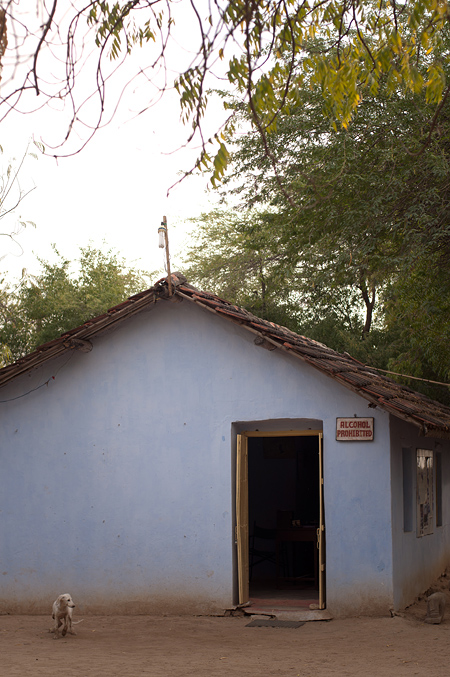
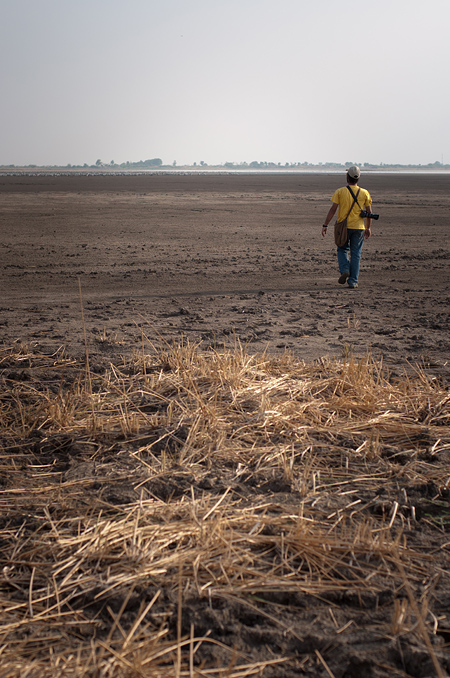
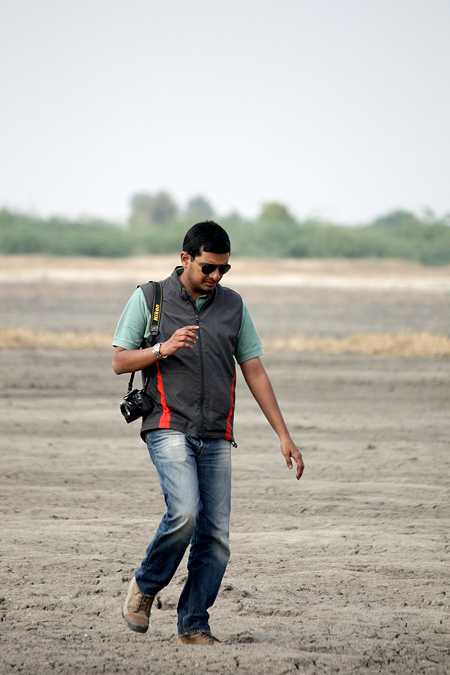
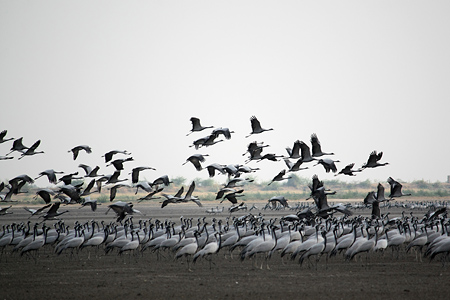
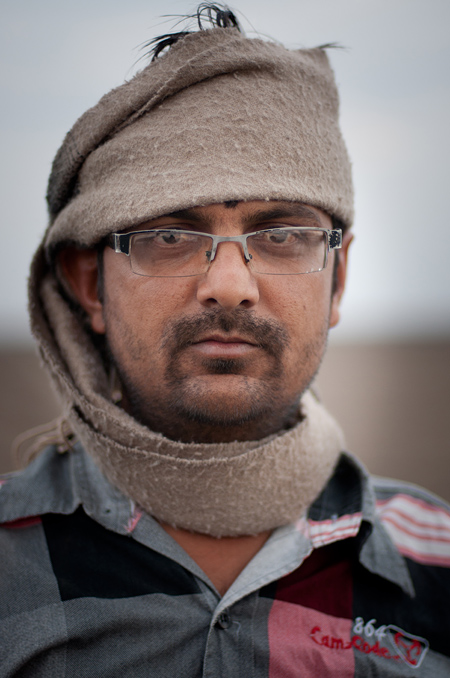
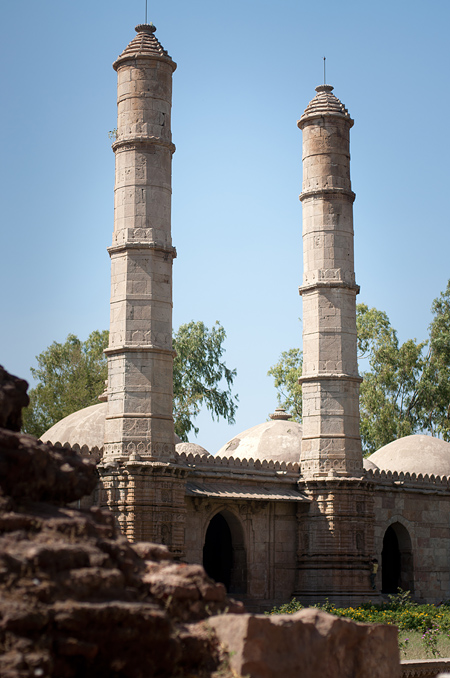
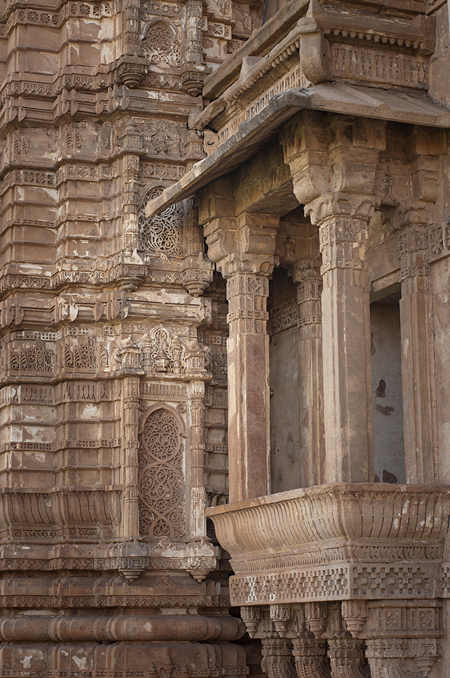
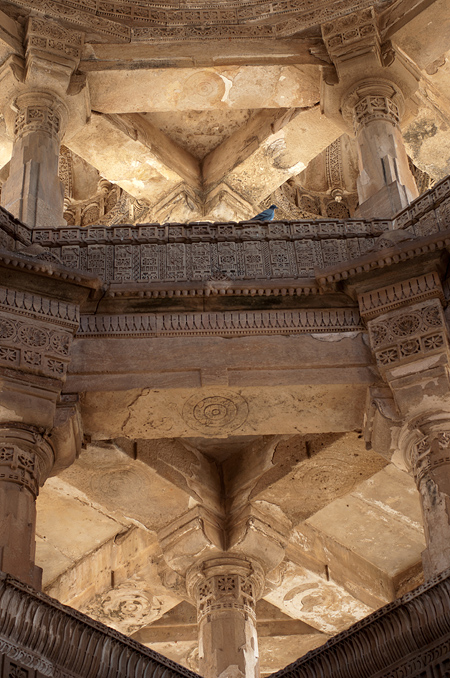
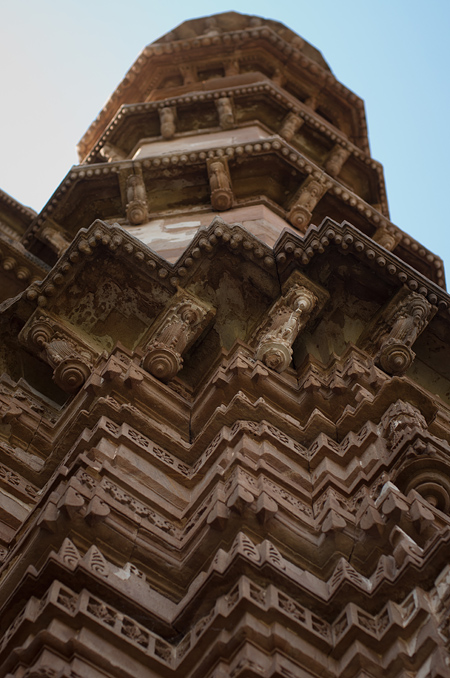
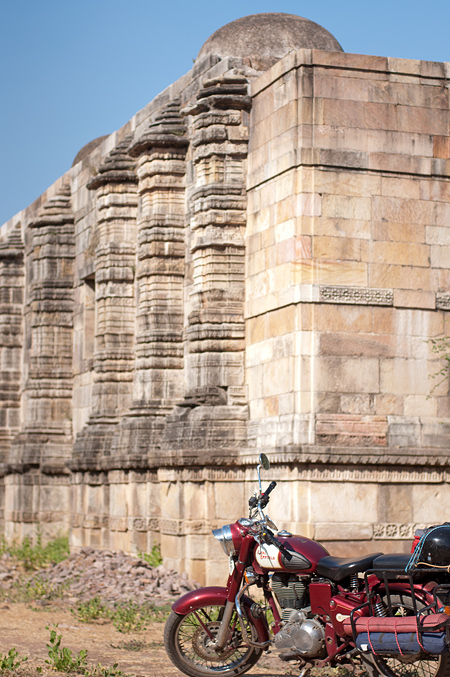
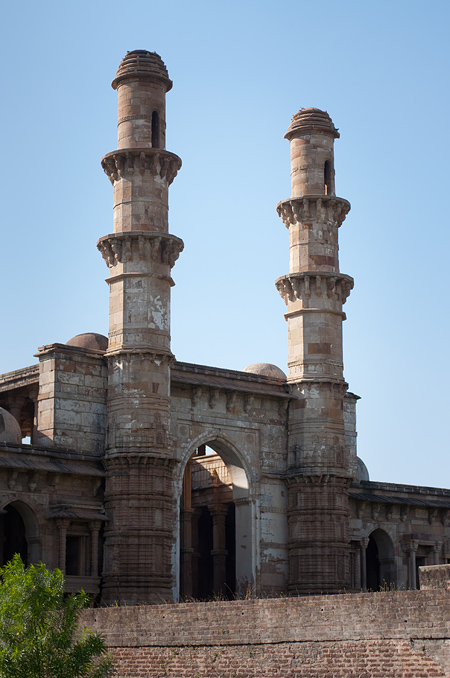
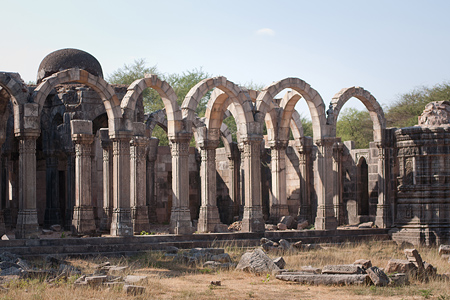
DAY 8 - Finding 15th and 16th century mosques surrounded by thorn bush forest in world heritage archaeological park of Champaner Route: Ahmedabad - Baroda - Champaner - Baroda - Kamrej - Surat
Distance: 409 km
Trip: 3145 km
Night: Vardan Kabra's home, Surat
DAY 9 - Bringing home the machine Route: Surat - Vesma - Talasari - Bombay
Distance: 305 km
Trip: 3450 km My photography kit of choice still remains: 2 bodies - FX and DX. 4 primes - 24mm 1.8, 50mm 1.4, 85mm 1.8, 300mm f4.0 (if you are going to a wild life sanctuary). Perhaps a teleconverter TC 1.7. And the iPhone. Travel more, backpack longer, ride slower, take smaller roads. 3500 kms. A friend put that in perspective for me. The breadth of India from east to west is 2950 km. The length of India from north to south is 3050 km. Even the radius of our planet Earth is barely 6400 km, less than 2x our roadtrip distance. So thank you lord for the firm back, fat bum, strong stomach (we bought 0 bottles of packaged drinking water on the entire trip), robust bike, no punctures failures breakdowns, no accidents and a great ride. Thank you for all that we touched, and all that we saw.
Tags: India, Ride, Royal Enfield, Wildlife